
Sigeumchi Namul – Easy Korean Spinach Side Dish
Korean Spinach Side Dish, or Sigeumchi Namul, is one of those magical recipes that proves healthy eating can be incredibly delicious and satisfying. I absolutely adore this simple yet flavourful preparation of blanched spinach, and I suspect you will too! It’s a staple in Korean households for a very good reason. What makes Sigeumchi Namul so universally loved? It’s the perfect balance of fresh, slightly sweet spinach, enhanced by a light, savory seasoning that truly allows the vegetable to shine. It’s not just about the taste, though. This Korean spinach side dish offers a vibrant pop of green to any meal, adding a refreshing counterpoint to richer dishes. Its subtle garlicky notes and hint of sesame oil create an addictive umami experience that has me reaching for seconds, every single time.
Discover the simple elegance of Sigeumchi Namul.
Let’s get cooking!
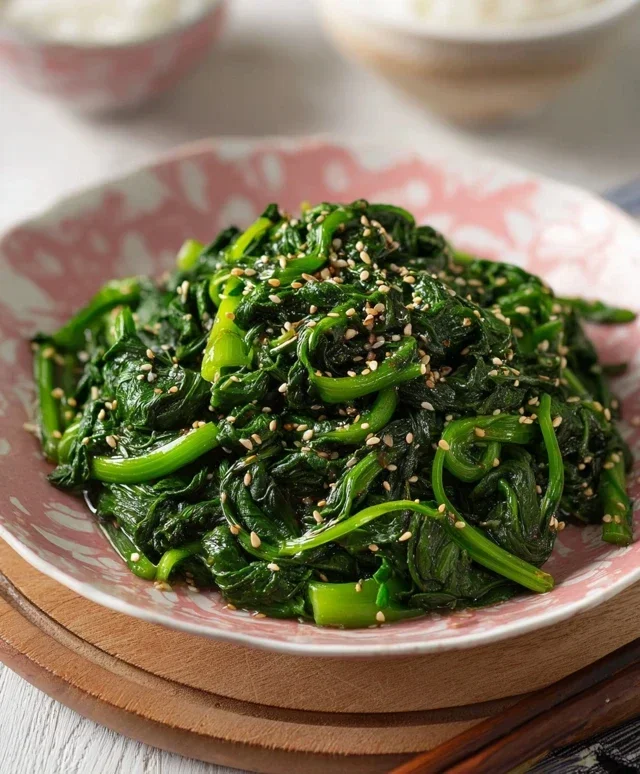
Korean Spinach Side Dish (Sigeumchi Namul)
There’s something incredibly satisfying about a simple, fresh side dish that bursts with flavor. Sigeumchi Namul, a classic Korean seasoned spinach, is exactly that. It’s a staple in Korean households, appearing on banchan (side dish) platters alongside almost any Korean meal. What I love most about this dish is its versatility and how it elevates humble spinach into something truly special with just a few key ingredients. It’s light, healthy, and incredibly easy to make, making it perfect for both weeknight dinners and more elaborate feasts. The nutty aroma of toasted sesame oil and seeds, combined with the savory depth of soy sauce and the subtle bite of garlic, creates a harmonious flavor profile that’s simply irresistible. Let’s get started on creating this delicious Korean classic!
Ingredients:
Cooking Instructions:
Preparing Sigeumchi Namul is a straightforward process that involves blanching the spinach and then seasoning it. It’s important to handle the spinach gently to maintain its vibrant green color and prevent it from becoming mushy.
1. Prepare the Spinach: First, I thoroughly wash the spinach under cold running water to remove any dirt or grit. Then, I trim off the very end of the stems, just enough to remove any tough or discolored parts. If the spinach leaves are particularly large, I might give them a rough chop, but usually, I leave them whole or in large pieces as they will shrink considerably during cooking. The goal is to have bite-sized pieces after blanching.
2. Blanch the Spinach: This is a crucial step for achieving the right texture and bright green color. I bring a large pot of water to a rolling boil. Once boiling, I carefully add the prepared spinach. I stir it gently for about 30 seconds to 1 minute, just until the leaves are wilted and bright green. Overcooking will make the spinach limp and dull in color, so it’s important to watch it closely. The exact time will depend on the freshness and thickness of your spinach. As soon as it’s wilted, I immediately remove the spinach from the boiling water using a slotted spoon or a spider strainer.
3. Shock and Squeeze the Spinach: After removing the spinach from the hot water, I immediately plunge it into a bowl of ice-cold water. This “shocking” process stops the cooking immediately, preserving its vibrant green color and crisp-tender texture. I let it sit in the ice bath for about 30 seconds to a minute. Once cooled, I gently lift the spinach out of the water, gathering it into a ball. The next critical step is to squeeze out as much excess water as possible. I do this by holding the spinach ball in my hands and gently but firmly pressing down, rotating it as I squeeze. Getting rid of this excess moisture is vital; otherwise, your Sigeumchi Namul will be watery and dilute the flavors of the seasoning. You might need to do this in batches if you have a large amount of spinach.
4. Season the Spinach: Now comes the part where we infuse our blanched and squeezed spinach with flavor. I transfer the squeezed spinach to a clean mixing bowl. To this, I add the finely minced garlic, the chopped green onion, the soy sauce, and the salt. I start by gently tossing the spinach with my hands, distributing the seasonings evenly. It’s important to use your hands for this step as it allows you to feel the texture of the spinach and ensure all the strands are coated. Taste a small piece of the seasoned spinach at this point. You can adjust the soy sauce or salt if you prefer a stronger or milder flavor.
5. Add the Finishing Touches: The final, and perhaps most defining, elements of Sigeumchi Namul are the toasted sesame oil and sesame seeds. I drizzle the toasted sesame oil over the seasoned spinach. The rich, nutty aroma is already starting to fill the air! Then, I sprinkle in the toasted sesame seeds. I gently toss everything together one last time, ensuring the sesame oil coats all the spinach and the sesame seeds are well distributed. The toasted sesame seeds not only add another layer of nutty flavor but also provide a lovely textural contrast. Once everything is well combined, the Sigeumchi Namul is ready to be served.
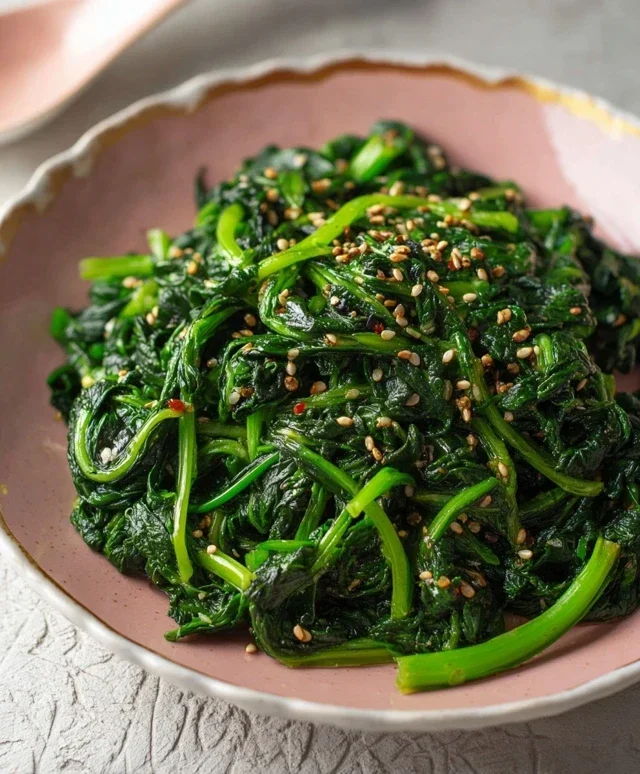
This Sigeumchi Namul is best enjoyed at room temperature or slightly chilled. It’s a perfect accompaniment to grilled meats, stews, rice dishes, or as part of a larger Korean banchan spread. The simplicity of its preparation belies the depth of flavor it brings to the table. Enjoy this healthy and delicious taste of Korea!
Conclusion:
There you have it – a simple yet incredibly flavorful Korean spinach side dish, Sigeumchi Namul! This recipe is truly fantastic because it highlights the natural sweetness of spinach with a delightful umami boost from sesame oil and garlic. It’s incredibly healthy, quick to prepare, and adds a vibrant touch of green and authentic Korean flavor to any meal. I love how versatile it is!
Sigeumchi Namul is a quintessential banchan, meaning it’s perfect as a side dish to accompany almost anything. Enjoy it with rice, kimchi, and your favorite Korean main courses like bulgogi or bibimbap. It also works wonderfully as a light and refreshing addition to bento boxes or even as a topping for noodles.
Don’t be afraid to experiment with variations! You can add a pinch of gochugaru (Korean chili flakes) for a touch of heat, a sprinkle of toasted sesame seeds for extra crunch, or even a little grated gin extractger for a zesty kick. Once you try this simple Korean spinach side dish, I encourage you to make it a regular part of your culinary repertoire. It’s a delightful way to enjoy fresh vegetables!
Frequently Asked Questions:
Can I use frozen spinach instead of fresh?
Yes, absolutely! If using frozen spinach, make sure to thaw it completely and squeeze out as much excess water as possible before seasoning. The texture might be slightly softer than fresh, but the flavor will still be delicious.
How long does Sigeumchi Namul last in the refrigerator?
This Korean spinach side dish is best enjoyed fresh, but it can be stored in an airtight container in the refrigerator for 2-3 days. The flavors tend to meld together beautifully over time, but the spinach may become a bit softer.
Korean Spinach Side Dish (Sigeumchi Namul)
A simple and refreshing Korean side dish (banchan) made with blanched spinach, garlic, and sesame oil.
Ingredients
-
1 bunch (10 oz) spinach (ends trimmed)
-
1 clove garlic (finely minced)
-
1 stalk green onion (chopped)
-
2 teaspoon soy sauce
-
1/8 teaspoon salt
-
2 teaspoon toasted sesame oil
-
2 teaspoon toasted sesame seeds
Instructions
-
Step 1
Wash spinach thoroughly and trim ends. -
Step 2
Bring a pot of water to a boil. Add spinach and blanch for 1-2 minutes until wilted but still vibrant green. -
Step 3
Immediately drain spinach and plunge into ice water to stop the cooking. Squeeze out excess water very well. -
Step 4
In a bowl, combine the squeezed spinach, minced garlic, chopped green onion, soy sauce, and salt. Mix well. -
Step 5
Add toasted sesame oil and toasted sesame seeds. Toss gently to combine. -
Step 6
Serve chilled or at room temperature.
Important Information
Nutrition Facts (Per Serving)
It is important to consider this information as approximate and not to use it as definitive health advice.
Allergy Information
Please check ingredients for potential allergens and consult a health professional if in doubt.